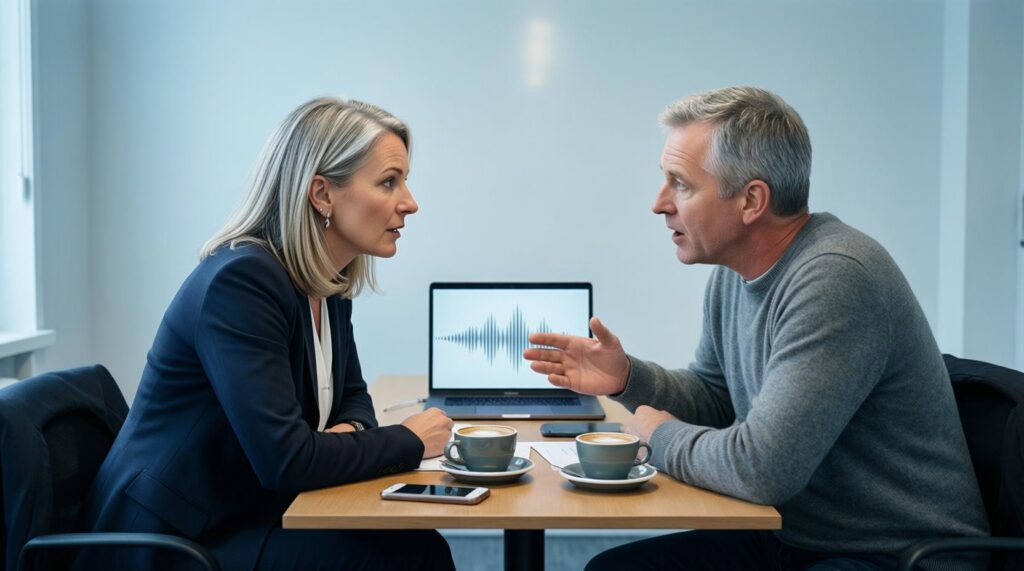
Our lives and our work are more and more digital. Yet what makes an SME valuable often happens far from the screen: a conversation with a client, a well-asked question, expert advice. My idea is simple. If your information is well digitised, you can automate a large part of the admin work. And you give the time you free up back to the human side.
Why does an SME owner no longer have time to listen to clients?

Because they are swamped by a host of small tasks. These take their time and their headspace.
Today, small business owners are cognitively overloaded. Emails, meeting notes, data entry, follow-ups: each task is small, but together they take up all the room. There is no time left to listen to clients.
So we make decisions to save time. We standardise our products. We offer the same thing to everyone. And that takes something away from the value we can offer.
If automation frees up that time, everything changes. You can talk to your clients better, apply your expertise better and create more added value.
What does an offer that doesn’t fit the client cost?

It costs sales. A standard presentation is not convincing, even when the product could be a perfect fit.
I’ve seen it often, in PowerPoint presentations and prospecting projects. None of the information was really tailored to the client. People simply served up the product built upfront.
Yet that product was full of small features that could be switched on or off. It could have fitted every client. But nobody had structured the client data. So generic sales decks went out, and they struggled to convince.
If the client information had been well structured, artificial intelligence and automation tools could have prepared tailored presentations. With a much better chance of converting.
The trap is that this knowledge of the client is gathered by spending time with them. And that time was being spent making standard presentations for everyone else. The chance to tailor the offer was lost.
Do you have to choose between going digital and seeing your clients?

No. That is exactly the most common mistake: by trying to choose, you end up doing neither.
Many owners digitise poorly because they prefer to spend time with their clients. And they don’t spend enough time with their clients because they can’t manage to digitise well. The result: their processes are not optimised at all.
Yet today we have every tool we need to digitise the analogue passively. That is, with no data-entry effort: the tool records, summarises and files for you.
Take an example. You spend an hour in a client meeting. Then 30 to 45 minutes typing it all up: the summary, the next steps, the notes. If that typing happens on its own, you can stay 1h30, even 1h45 with your client instead of one hour. And leave with far more information.
I do it myself. I digitise my meetings whenever possible, on video calls and in person, always with the participants’ consent, of course. In my experience, I save 30 minutes of typing per meeting: the minutes, the action items, the ideas to explore. Not counting the time I no longer spend looking for my data. I know exactly where it is. And above all, I know it exists.
Is too much data a problem?
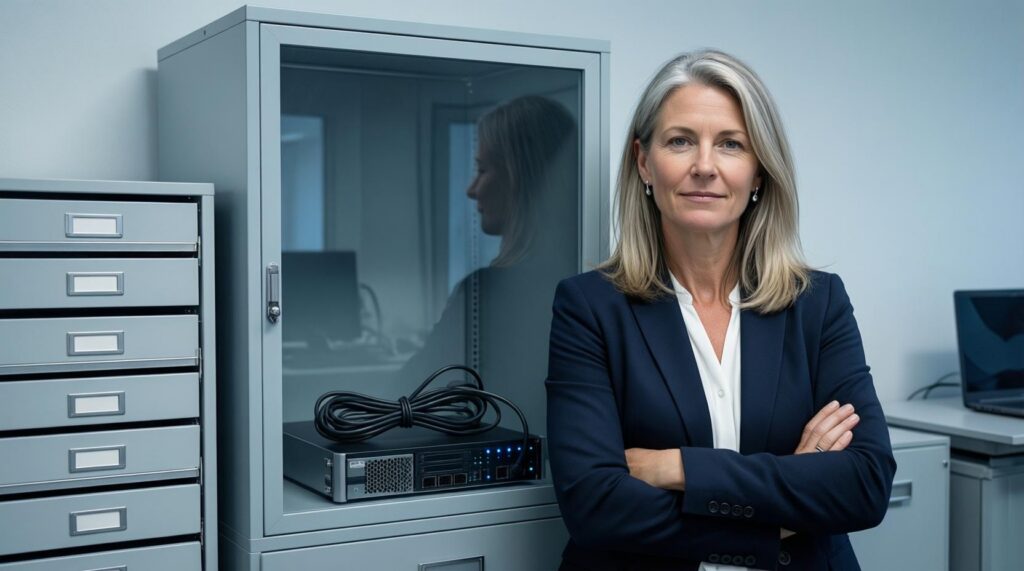
No, if it is handled well. I believe you should digitise all your data, and I know few people agree with me.
Too much information is not a bad thing. Provided it is stored in good tools, properly categorised, then really put to use. And provided you do it legally, with consent and securely. In Switzerland, recording a conversation without the other participants’ consent is punishable under Article 179ter of the Swiss Criminal Code. And your client data remains subject to the Federal Act on Data Protection (nFADP).
At my company, all data is digitised. It is stored on a server I control. No service I haven’t approved uses it. My content lives in just a few tools, and those tools talk to each other. So no wasted time, no duplicate data, no inconsistencies.
If the security of your data worries you, I cover part of it in What every Swiss SME owner should know about AI at work.
Where should an SME start?

Start with an inventory: your tools, and the moments when your information gets lost.
- List every tool you use.
- Check whether they talk to each other, and how.
- Spot the moments in the day when information is recorded nowhere, and so is lost. A meeting, a call, a decision made in a corridor.
- Find a way to capture each of those moments.
Putting digitisation at the heart of the company has a cost, that’s certain. But see it as capital. A company invests in machines or a factory to create value. Well-structured data creates value too, for example the day you want to sell your business. If everything lives in your head or your employees’ heads, the value leaves with them.
Two things not to do. First, doing nothing: your neighbour is going to get on with it. Second, doing it badly, by going it alone without a specialist. Going digital takes time at the start. You have to change some internal processes, take a step back, and accept slowing down during setup. The productivity gain clearly makes up for that delay afterwards.
Sharpen the axe before you cut the tree.
We live in a digital world, and artificial intelligence is speeding it up even more. You have to set it up properly in your company, taking your time.
It’s the old image of the axe. Better to sharpen it well before cutting the tree than to attack the job unprepared, without solid foundations and without good tools. Once the axe is sharp, the time you save goes back where it matters: to your clients.
Want to know where your company loses information, and how much time you could give back to your clients? Book your free audit. You can also explore our services.
FAQ
Is it legal to record a client meeting in Switzerland?
Yes, if every participant agrees before you start. Recording without consent is punishable under Article 179ter of the Swiss Criminal Code, so ask at the start of the meeting and keep a note that they agreed.
What kind of tool takes meeting notes for me?
A meeting assistant records, transcribes and summarises video calls and in-person meetings. Pick one that processes data in Switzerland or the EU, does not train on your recordings, and stores the transcripts where you can find and delete them.
Where should a small company automate first?
Start with one moment where information gets lost and time is spent typing, often client meetings. Measure the time saved there before moving on to the next one.
Does automation replace employees?
Here the aim is the opposite. Automation takes over the typing, filing and follow-ups, so your team spends more time with clients and on the expert work only people can do.